Yin Yoga & Meditation Workshop November 29-30, 2025
A 6-hour workshop on the fundamentals of posture and attitude in meditative practice. Supported by Yin Yoga practice.

Saturday 29 November 9 to 10:20 a.m.: Introduction & Practice: Yin Yoga for the spine
Introduction to the weekend and overview of practices and theories
A sequence that guides you through the anatomical description of the spine, exploring the 6 directions of the spine and its range of movement.
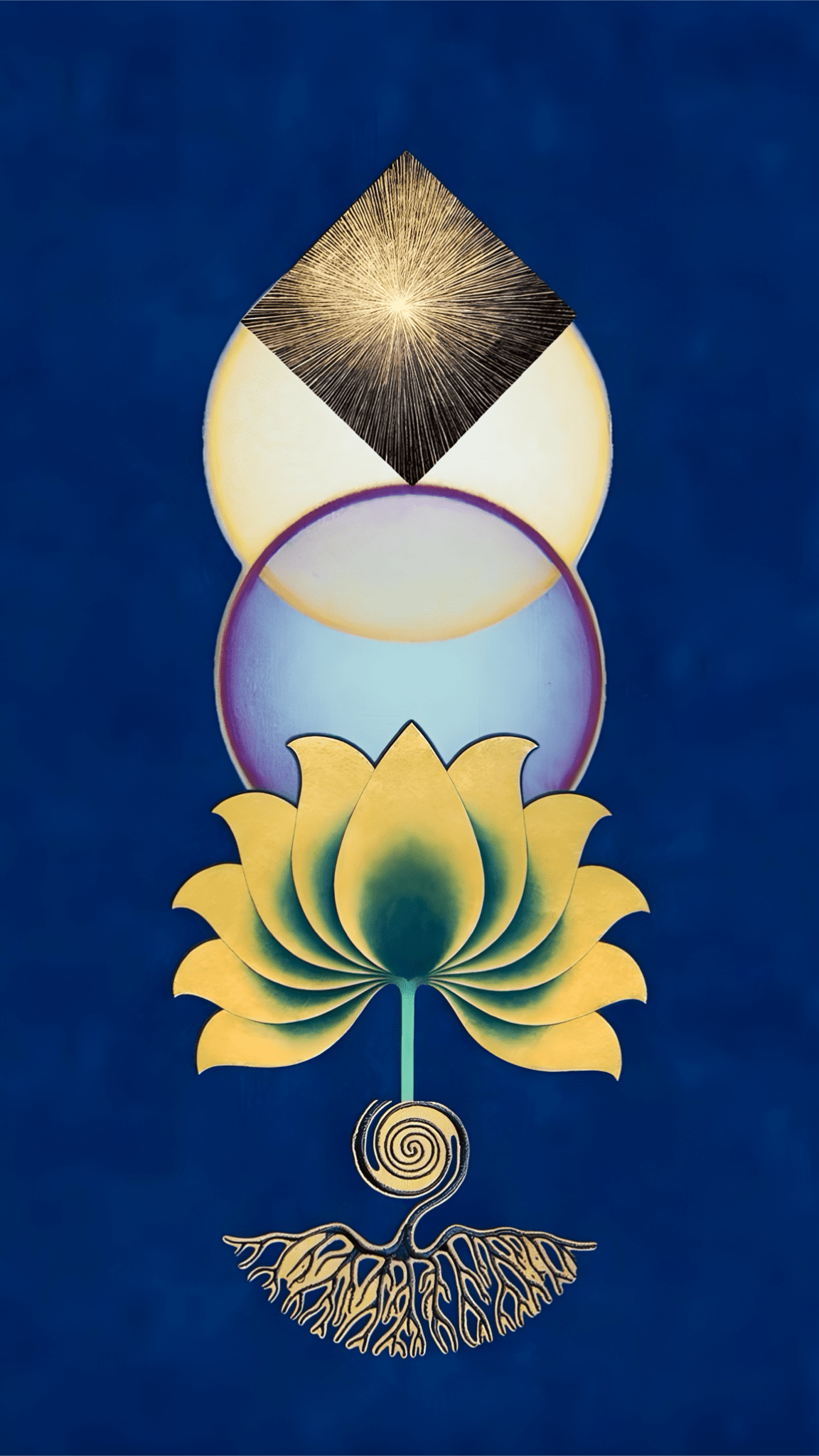
Saturday 29 November 10.20am to 11.20am: Theory: Connecting to the Axis Mundi
The relationship betweenthe Axis Mundi and the spine is symbolic and spiritual ; the spine is considered the sacred central pillar of the human body, reflecting this cosmic axis. This cosmological concept represents the link between Heaven and Earth, or between different realms of existence, in many meditative traditions.
The Axis Mundi acts as a conduit allowingthe Anima Mundi to permeate and sustain the cosmos, serving as a mediator between the divine intellect and the material world, thus ensuring harmony and coherence throughout existence. In this way,the Anima Mundi circulates and connects the microcosm (individual life) to the macrocosm.
Integrity: Understanding the importance of correct posture in meditation practice. What to do and how to maintain it?
Relaxation: This quality promotes both mental calm and alertness. How to achieve relaxation through awareness?
Stillness: The demanding quality of stillness is essential to guide the mind in the right direction, moving from the gross to the subtle aspects of the body-mind complex.
10-minute break.
Saturday 29 November 11:30 a.m. to 12:00 p.m.: practice: meditation
Meditative practice articulated around the axis.
Development of the three fundamental qualities of established calm: integrity, relaxation and immobility.

Sunday 30 November 9am to 10.20am: Practice: Yin Yoga Opening the hips.
A practice designed to target the main hip muscle groups and stimulate the 6 joint directions of the hips.
To help keep the body stable and in a sustainable sitting position.
Sunday 30 November 10:20 to 11:20 a.m.: Theory: Intention & release
The developmentof attitudes conducive to a meditative mind requires sustained attention to the object of focus and the active relaxation of forms, sensations, and phenomena in the practice of postural yoga and the meditative approach.
Abhyāsa (applied repetition) and Vairāgya (non-attachment) are fundamental concepts of yoga philosophy, often described as the two poles of spiritual practice.
The description of Ting (attentive listening) and Song (active relaxation) in Chinese internal arts. These two terms symbolize important principles of Chinese internal arts: the balance between tension and relaxation.
In Buddhism, there are two fundamental principles that support each other on the path to spiritual awakening. Bhavana (the process of development and cultivation) and Anatta (the absence of a permanent and immutable self). Together, they provide the necessary framework for freeing oneself from the grip of the ego and progressing toward the cessation of suffering.
10-minute break
Sunday 30 November 11:30 a.m. to 12:00 p.m.: practice: meditation
A meditative practice that alternates between manipulating the breath and observing it.
This technique will highlight the favorable attitudes mentioned above.