

Connection and Cultivation of the Lower Dantian.
Five immersive days devoted to activating the lower Dantian, supported by the practice of Yin yoga.
From July 27 to August 1, 2026
At the GARDEN of TAO - Joannas, Ardèche
Yin Yoga & Meditation Immersion - Practice & Theory - Language : French 🇫🇷
The "center of gravity"or "center of mass" is a single, invisible point located approximately one inch below the navel, toward the spine; it lies deep within the abdominal cavity, where the total mass of the body seems to be concentrated. The body is most stable when the center of gravity is aligned directly above the base of support.
This center of gravity correlates to an internal space known in Chinese medicine and the internal arts as the "lower Dantian" (xia dantian 下丹田), from which stems the principle that one must "anchor the qi in the Dantian."
This center, located in the lower abdomen, is a neural network, sometimes referred to as the "second brain." It can be stimulated through concentration and various physical and mental exercises. With practice, you will be able to condition this area so that it can hold an increasing amount of energy.
PRACTICAL
The program is structured around three main steps that allow you to descend and gather Qi in the lower dantian.

Opening of the body
When joints, fascia, and muscles are relaxed and gently stretched, the channels along the arms, legs, spine, and torso allow for freer circulation of breath, blood flow, and nerve signals.
This relaxation allows weight and breathing to anchor downward, so that the feeling of fullness in the lower abdomen (descending Qi) arises naturally.
Yin Yoga specifically targets the body's connective tissues, such as the fascia and the tissues around the joints. Through a series of poses , the body's main myofascial lines are activated and connected, releasing tension and blockages and improving blood, lymphatic, and energy (Qi) circulation.
This opening work will also be supported by the practice of Ji Ben Gong, a set of fundamental conditioning exercises used in Chinese internal arts.
Practice ofopening the Qientry points located in the center of the palms and soles of the feet.
Relaxation & Descent
Releasing and lowering Qi in poses involves gradually releasing unwanted tension so that weight, breath, and awareness descend from the upper body to the pelvis, legs, and feet.
The lower dantian then becomes the immobile center of gravity.
This action does not consist of "pushing down" at the muscular level, but rather of modifying the internal structure and action of the nervous system so that the tissues can hang from the skeleton while maintaining an open and upright posture.
The descent of Qi depends on the quality of the Song (active relaxation): the structure is maintained by the alignment of the skeleton, which allows Qi to converge towards the lower Dantian, ensuring internal buoyancy and continuity of force throughout the body.
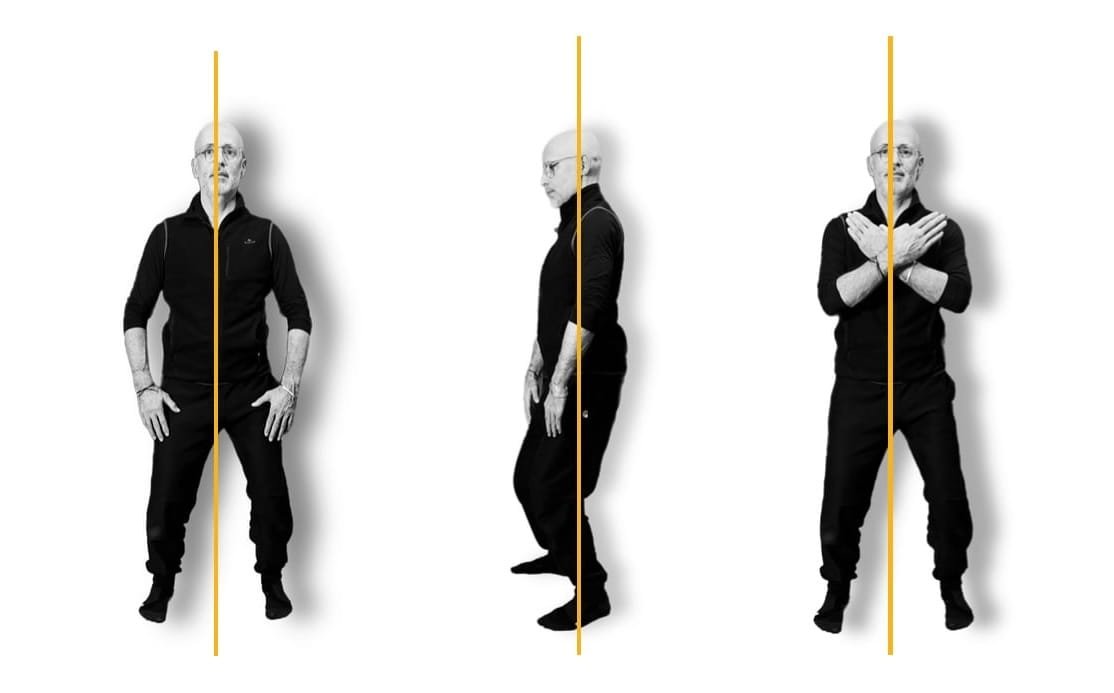
Song is mainly practiced through Zhan Zhuang. It involves holding specific poses in order to develop internal energy (qi), improve structural alignment, and promote unity between body and mind.
The bear posture emphasizes grounded power for stability and qi circulation. Practitioners of internal arts today use it as a fundamental posture for lowering qi and structuring the lower dantian.
Practice Wuji to prepare the body and develop the lower dantian. This helps to align the body, lower the center of gravity to the lower abdomen, and allow Qi to accumulate there through stillness and relaxation.
Drop Off & Pick Up
Using clear and light intention, Yi, and attentive listening, Ting, we can guide the Qi to the lower Dantian, where it gradually accumulates and aggregates.
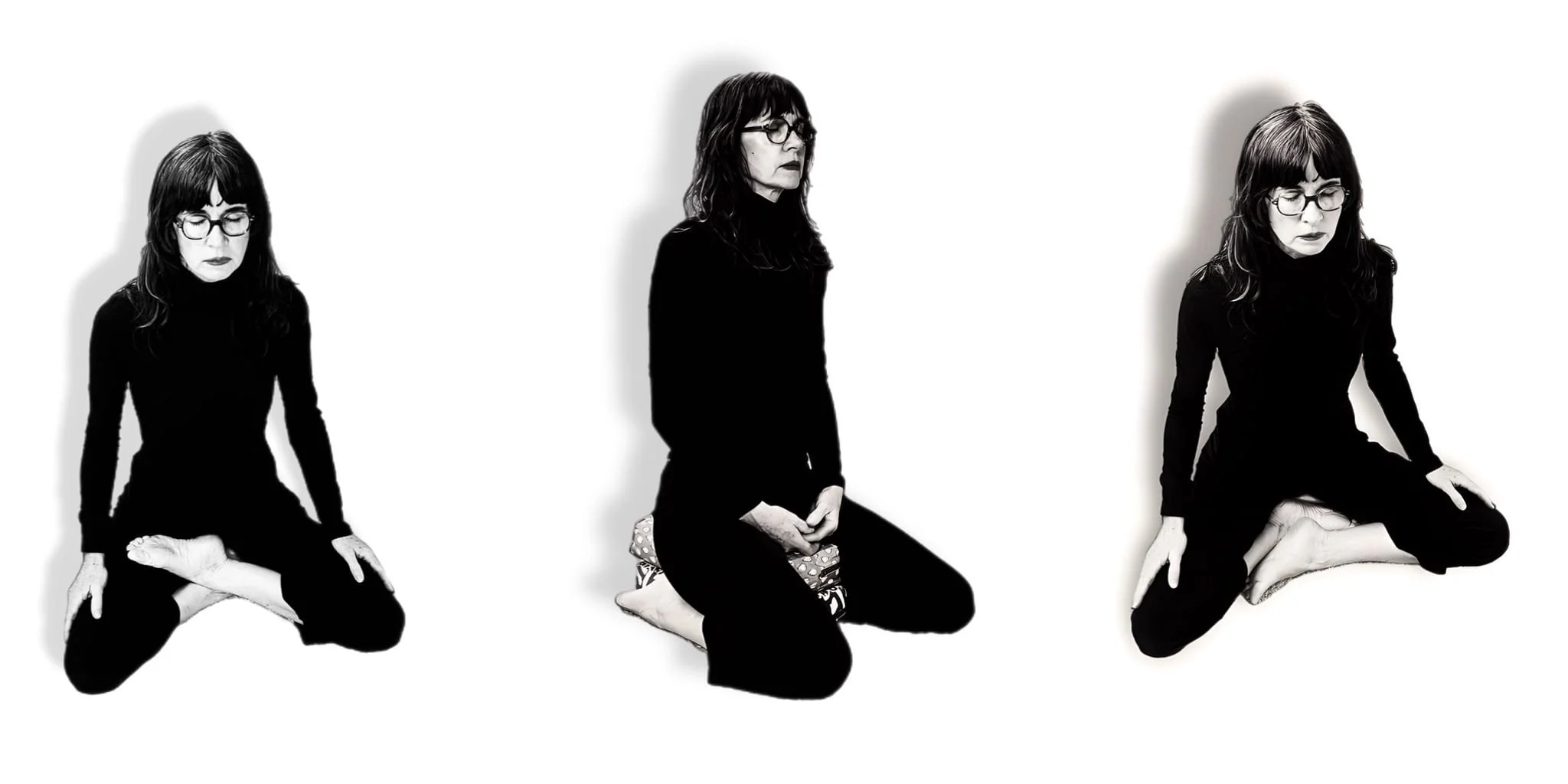
Qi accumulates when the body is aligned vertically (standing and sitting positions), from the top of the skull to the perineum, allowing body mass and breathing to anchor downward, creating a stable energy field.
The Dantian is like a magnetic field located in the lower abdomen, which stabilizes the body by preventing Qi from dispersing to the head or chest, thus promoting its natural development and circulation. This process takes place without resorting to restrictive methods, but through gentle awareness and the establishment of abdominal magnetism.
This is done by manipulating various tissues located around the lower Dantian, such as the abdominal wall, diaphragm, and pelvic floor. The interaction between gentle contractions, retentions, and relaxation generates enough activity to gather qi and trigger the process.
The practice of reverse breathing embodies the cultivation of Qi and facilitates the storage of energy without stagnation, promoting the opening of channels and emotional stability.
THEORY
Learn how to connect and align with the Taiji Pole
It refers tothe centralvertical axis of energy alignment in Chinese internal arts such as Qigong. It extends from the crown of the head to the perineum, passing through the center of the body, connecting the main energy centers, such as the dantians (lower abdomen, heart/chest, and crown of the head), and sinking into the earth, thus facilitating the harmonious circulation of Qi (vital energy).
Symbology
Connection
Purpose
Enjoy the benefits and theory behind the lower Dantian (xia dantian 下丹田)
Anchoring energy in the lower dantian promotes emotional stability and reduces stress and anxiety. It acts as the main reservoir of Qi, preventing its dissipation, boosting overall vitality, and strengthening the immune system. Develops inner tranquility, spiritual well-being, and a sense of fulfillment through grounded awareness.
Location
Benefits
Scientific data
Discover and develop Ting - Song and Yi
Ting - Intention (聽) refers to "the energy of listening." This practice encourages calmness and receptivity, key elements of Taoist meditation, allowing practitioners to attune themselves to the subtle flow of qi and natural rhythms.
Song —often translated as "relaxation" , or "looseness" (鬆)—is a fundamental principle of Taoist internal arts. It refers to a state of effortless relaxation in which the body maintains its structural alignment without tension, allowing qi (vital energy) to flow freely through the meridians.
Yi - (意) Works with Shen (神 ) "spirit or consciousness" and Xin ( 心) "intention of the heart-mind"; Shen strengthens Yi, which then channels Qi in a unidirectional manner toward a specific point or goal. The principle "Yi Dao Qi Dao"(where intention goes, energy follows) emphasizes this in Taoist energy culture.
Enjoy the benefits and theory behind Zhang Zhuang (站樁)
The poses a "suspended" skeleton where the muscles and fascia relax on the bones, minimizing tension while gravity promotes natural elasticity. Key adjustments include opening the lower back, lowering the chest (empty at the top, full at the bottom), and raising the head through the neck, opening the myofascial lines from the feet to the top of the skull.
Adjustments
Breathing techniques
Benefits
central hinge kua (胯)
If you have any questions about the program, please contact us using our contact form.
Schedule for the day:
8:00 a.m. - 8:45 a.m.: Meditation / 9:00 a.m. - 9:45 a.m.: Jin Ben Gong / 10:00 a.m. - 10:30 a.m.: Zhang Zhuang / 10:30 a.m. - 11:15 a.m.: Theory / 11:30 a.m. - 12:00 p.m.: Meditation
12:00 p.m. - 3:00 p.m. - Lunch break
3:00 p.m. - 4:00 p.m.: Theory / 4:15 p.m. - 5:45 p.m.: Yin Yoga / 5:45 p.m. - 6:30 p.m.: Meditation
Arrival from 3:00 p.m. on July 27 - Departure on August 1 after lunch.
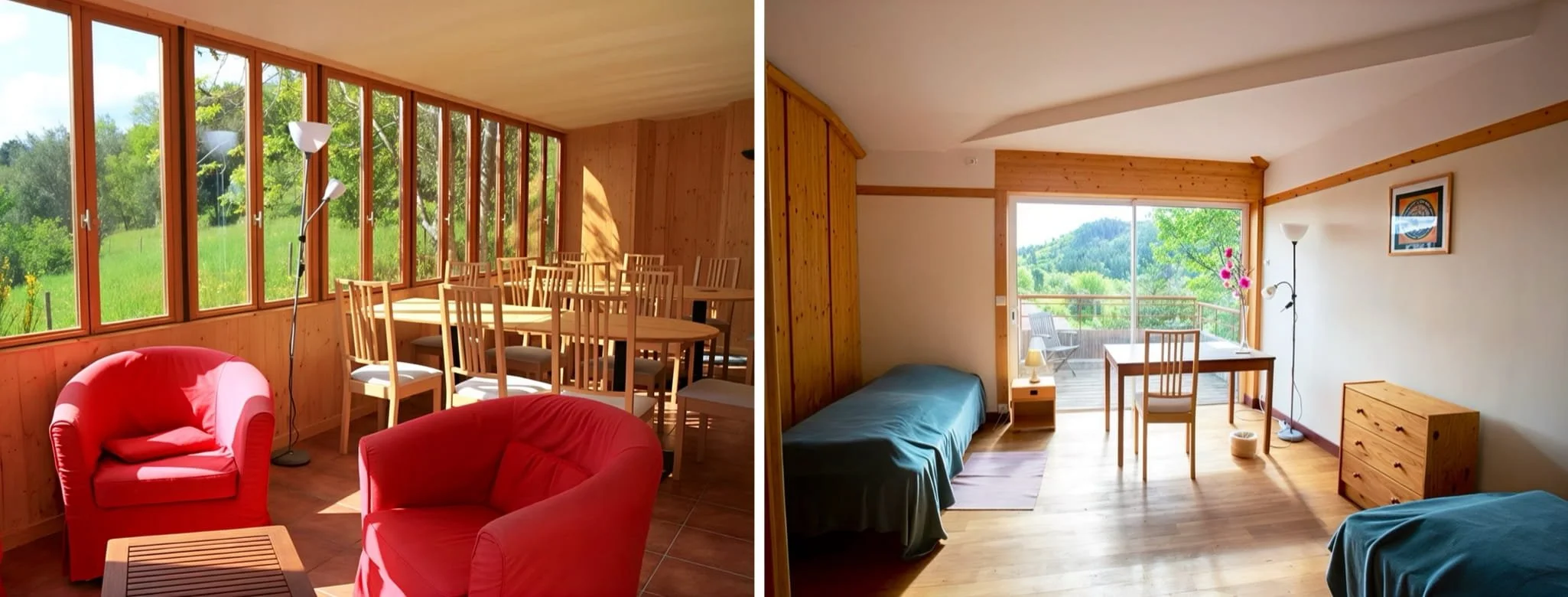
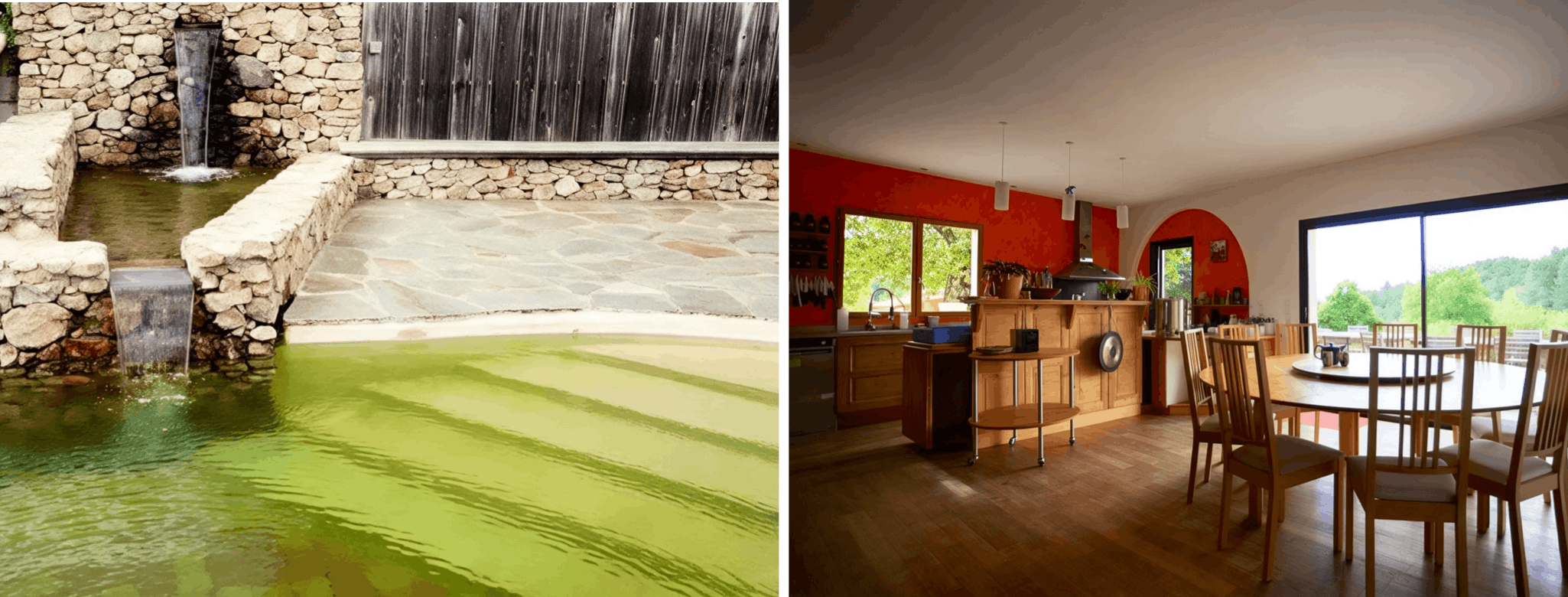
Location of immersion
the Tao gardens
161 Serremejeau Road
07110 Joannas
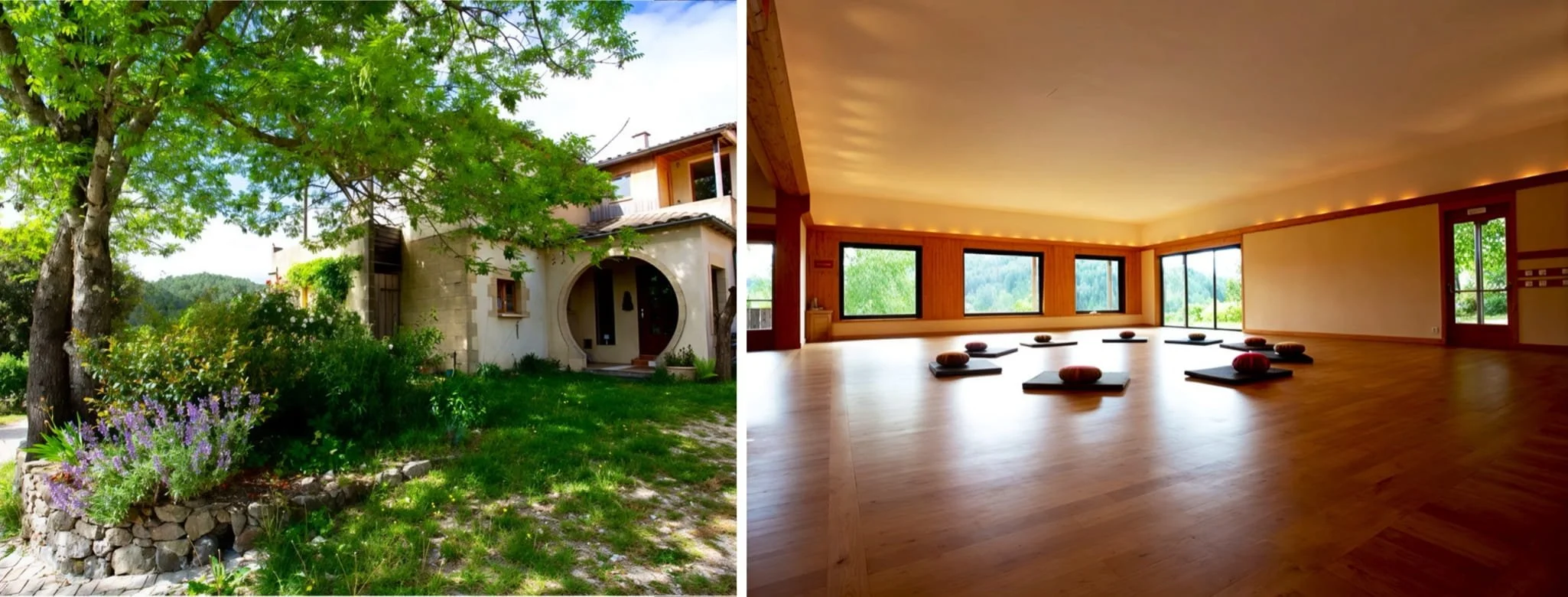
The Tao Gardens
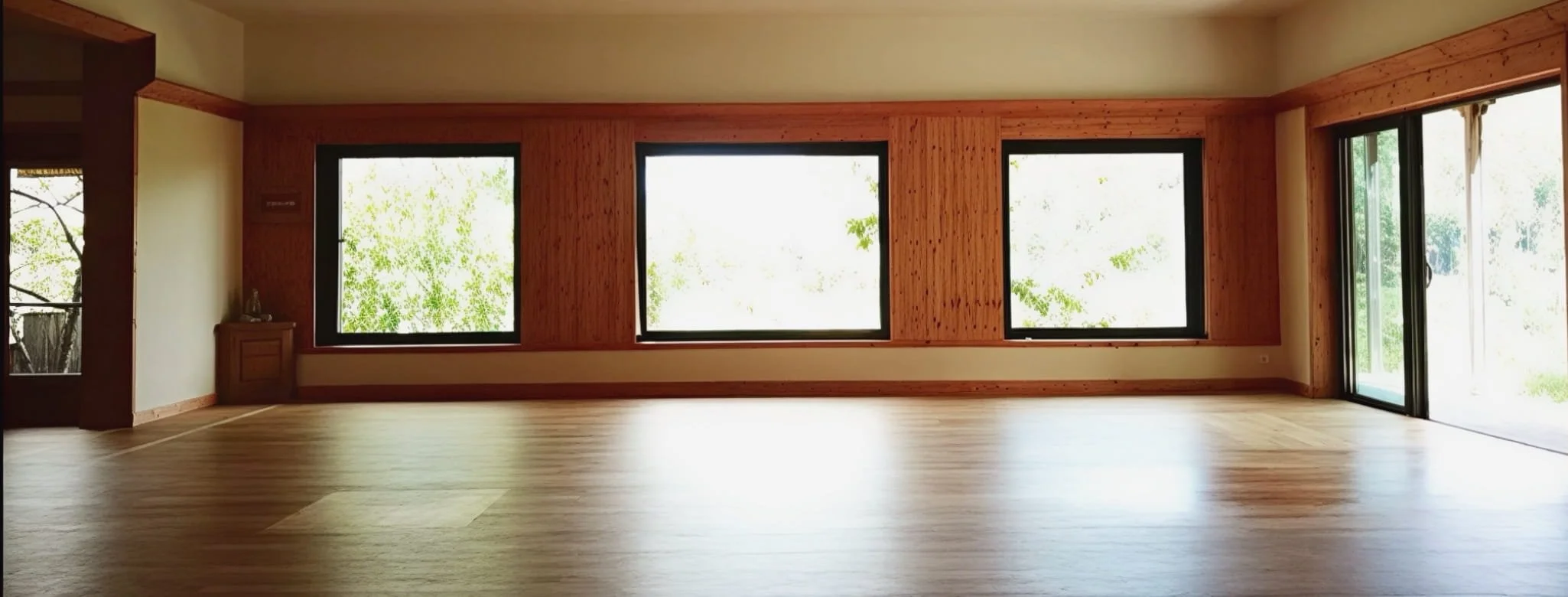
Soothing yet invigorating, calm yet full of life, Les Jardins du Tao pleasantly promotes concentration, rejuvenation, and creativity.
Investment
5 days immersion & full board in a triple room: €775 - Plus tourist tax of €1 per night.
5 days immersion & full board in a double room: €795 - Plus tourist tax of €1 per night.
5 days of immersion & full board in a single room: €865 - Plus tourist tax of €1 per night.
Full board includes 3 meals per day and 5 nights' accommodation. Please contact us if you have any special dietary requirements.
Please contact us in advance to let us know your room preference.
To reserve your place, please contact us or pay directly here to confirm your participation. The balance of the payment must be settled on the day of your arrival at Les Jardins du Tao.
If you cancel your registration 4 months before the event, 100% of your deposit will be refunded (minus a $15 administration fee). Between 3 months and 1 month before the event, 50% will be refunded; less than 1 month before the event, no refund will be made.